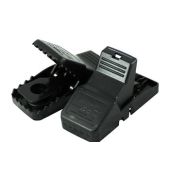



Restaurant Rodent Control Products
Rodents in a restaurant create three problems fast: food contamination risk, inspection risk, and repeat business risk. The fix is rarely “more poison” — it’s a tighter program that combines exclusion, monitoring, and targeted removal.
Why restaurants get rodents (even “clean” ones)
Rodents don’t need a dirty kitchen. They need:
- Access (a door gap, pipe penetration, dock plate void, damaged vent screen)
- Harborage (clutter, cardboard, voids behind equipment, drop ceilings)
- Food + water (dry storage dust/spillage, beverage stations, mop sinks, floor drains, grease areas)
Most restaurant infestations persist because entry points and travel routes aren’t fully identified. Control products work best after you map where rodents are moving.
Where to look first (high-yield zones)
- Receiving / loading dock: door sweeps, dock levelers, corners where slab meets wall
- Dumpster / grease area: burrows along pads, vegetation, stored items against the wall
- Dry storage: behind shelving, under pallets, along back walls
- Kitchen line: behind/under coolers, fryers, dish machine (heat + crumbs)
- Ceilings and chases: above walk-ins, around conduit bundles, plumbing walls
- Bathrooms / mop sink rooms: moisture + pipe penetrations
Tip: Rodents typically travel tight to walls. Open-floor trap placement usually underperforms.
Restaurant rodent control products by category (and what they’re actually for)
1) Monitoring tools (find activity before you “treat”)
Glue boards, non-toxic monitoring bait, tracking dust/patches
Use these to answer: Where are they traveling? Is activity increasing or decreasing?
Best use: behind equipment, along wall/floor edges, in tight void-adjacent areas
Common mistake: using monitors as “set and forget.” Monitoring only works when checked on a schedule.
2) Mechanical traps (primary interior removal tool)
Snap traps, multi-catch traps, covered/tunnel traps
For many restaurants, interior control is most defensible and controllable with traps: you know what was caught, where, and when.
Best use:
- Place in pairs along runways (mice often travel edges)
- Put traps perpendicular to the wall with trigger toward the wall
- Increase density before increasing variety
Common mistake: too few traps, spread too far apart.
3) Tamper-resistant bait stations (structured, compliant placements)
Lockable stations for exterior/perimeter and selected non-food areas
Bait stations aren’t magic; they’re a delivery and safety system. Their value is consistency and control of placement.
Best use: exterior perimeter, dumpster lines, along fence/harborage edges
Common mistake: using bait stations indoors as the primary plan while entry points remain open.
4) Professional rodent baits (when baiting makes sense)
Blocks, soft baits, place packs (label-dependent)
Baits are most effective when:
- competing food is reduced (spillage, open dry goods, clutter)
- you’re controlling exterior pressure and/or confirmed interior travel routes
- placements are secured and maintained
Common mistake: rotating baits constantly. First fix placement, quantity, and competing food.
5) Exclusion supplies (the highest ROI category)
Rodent-proofing materials, door sweeps, sealants, mesh/packing
If you want fewer repeat incidents, exclusion is the lever. Mice can enter through very small gaps; rats exploit larger structural openings and weak points around docks.
Best use: doors, pipe penetrations, wall-to-slab cracks, conduit bundles, vents
Common mistake: sealing without addressing what caused the gap (door alignment, dock hardware, degraded thresholds).
A simple restaurant rodent program that holds up in real life
- Confirm species + footprint
Use monitoring tools to map activity (kitchen line vs storage vs ceilings vs perimeter). - Close the building
Fix door gaps first, then penetrations and dock voids. Exclusion reduces the “refill rate.” - Trap inside, manage pressure outside
Interior: mechanical traps + monitoring.
Exterior: bait stations/traps to reduce incoming pressure from dumpsters/docks. - Set a service rhythm
Check devices on a schedule (frequency increases with activity). Log captures and hotspot shifts. - Reduce harborage and food competition
Cardboard, clutter, and spillage are often the difference between “occasional mouse” and chronic activity.
Quick troubleshooting (what your results usually mean)
- No catches, but droppings continue: traps not on runways, too few traps, or ceiling/void travel not addressed
- Catches spike after exclusion work: normal—rodents already inside are getting intercepted; keep trapping until zero activity
- Bait untouched: strong competing food, wrong placement, or station not on a travel edge
- Activity keeps returning: almost always missed entry points near receiving/dock/dumpster, or an exterior harborage source
Restaurant Rodent Control FAQ
What’s the most effective rodent control strategy for any restaurant?
The best results come from sequencing: confirm where activity is happening, close the entry points, then remove rodents with traps while reducing exterior pressure. If you skip exclusion, you can eliminate rodents indefinitely and still “lose” because new ones keep replacing them.
Should restaurants use traps or bait indoors?
In most restaurants, trapping is the cleanest, most controllable interior method because it gives immediate feedback and avoids bait acceptance issues when food is abundant. Bait tends to perform best when it’s used to reduce exterior pressure or when it’s placed in tightly controlled, label-compliant locations where competing food is minimized.
Where do rodents usually enter restaurants?
Most entries are routine, not dramatic: worn door sweeps, gaps at dock plates, openings around pipe and conduit penetrations, and small cracks at the slab-to-wall joint. Restaurants often focus on the kitchen, but the highest-yield entry checks are usually at receiving, back doors, and utility penetrations.
What should I do if I see droppings but traps aren’t catching anything?
Assume placement is wrong before assuming the product is wrong. Rodents typically travel tight to edges, behind equipment, and through voids, so traps set in open areas commonly miss even with heavy activity; shifting traps to confirmed runways and increasing density usually changes results within a few checks.
Why do rodents keep coming back after we “get rid of them”?
Repeat activity almost always means either an entry point is still open or there is ongoing exterior pressure from dumpsters, grease areas, or nearby harborages. A short-term drop in sightings can happen even when the population isn’t solved, so the real measure is whether monitoring stays quiet over time after exclusion is completed.
How often should a restaurant check traps, monitors, and stations?
You check often enough to learn from the environment and keep devices effective; during active issues that means frequent checks, and during maintenance it means consistent scheduled checks that catch early signs before customers do. The main failure mode is inconsistency—long gaps between checks turn small, solvable activity into a recurring problem.
How do I know if it’s mice or rats, and does it change the plan?
It matters because mice can exploit very small gaps and may live inside walls and ceilings, while rats are more tied to exterior harborages, dumpsters, and burrows and can cause heavier structural damage. The tools overlap, but mice problems usually demand tighter interior monitoring and exclusion detail, while rat problems typically require stronger exterior-focused pressure reduction plus entry-point correction at docks and ground-level openings.
Build a Rodent Control Program That Prevents Repeat Activity
Rodent control in restaurants works when it’s treated like a system, not a one-time treatment. Start by identifying where activity is occurring and how rodents are getting in, then prioritize exclusion so the building stops “refilling.” Use interior traps and monitoring to remove what’s already inside and to confirm progress, and manage exterior pressure around dumpsters, loading areas, and door thresholds so you’re not fighting the same problem every week. When monitoring stays quiet over multiple checks, maintain a lighter layout and keep exclusion tight—this is what keeps rodent issues from returning during busy seasons, staffing changes, and weather shifts.