



DiPel PRO DF
DiPel Pro is a biological insecticide with Bacillus thuringiensis. This effective, broad spectrum insecticide is OMRI (Organic Materials Review Institute) listed for use in organic production. This biological insecticide controls more than 30 insects, including various bagworms, looper, tobacco budworms, armyworms and tent caterpillars. As an organic insecticide, it is biodegradable and easy on the environment, with minimal effects on humans and non-target animals.
Product Information
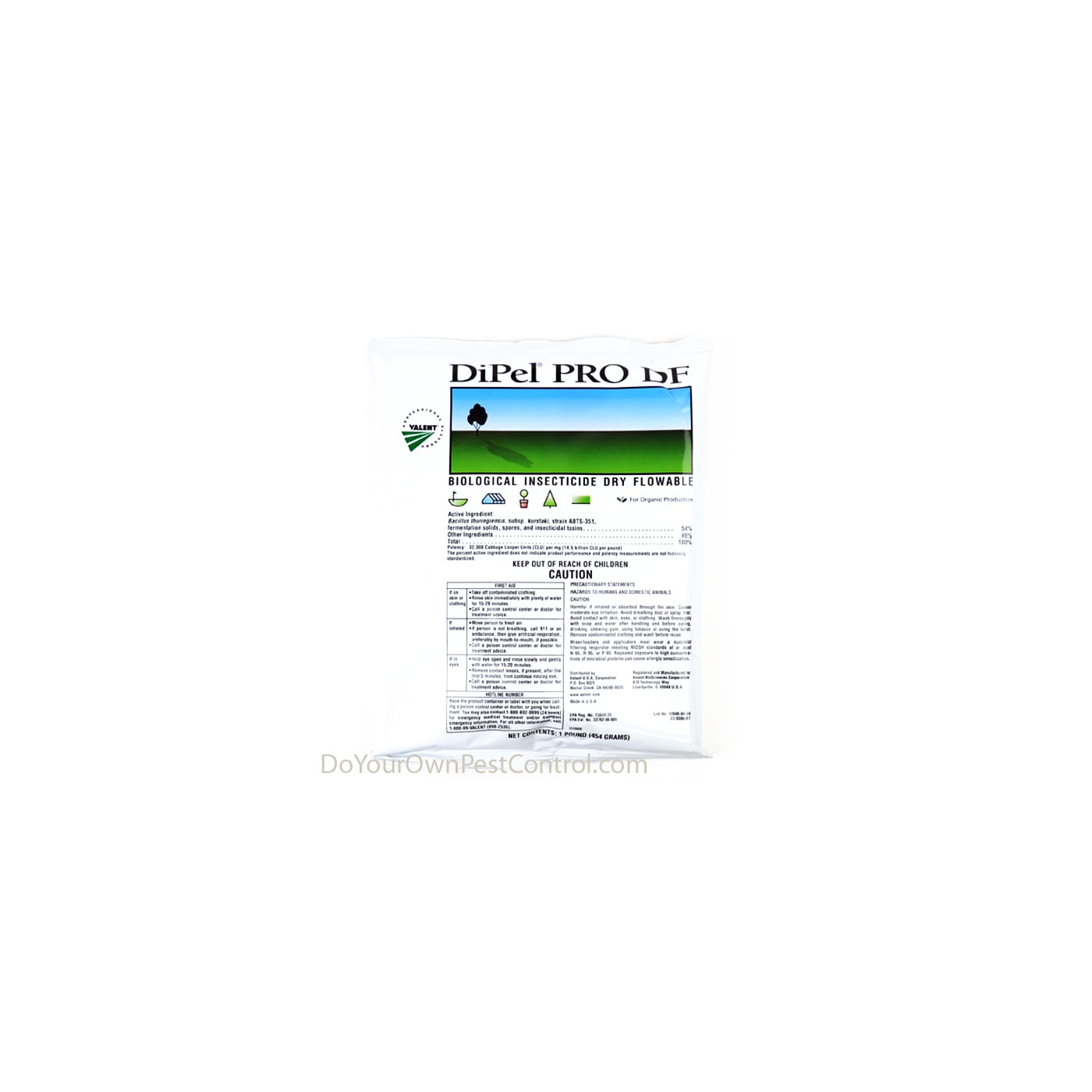
DiPel PRO DF
DiPel Pro is a biological insecticide with Bacillus thuringensis v kurstaki (BT),54%. BT is a highly selective bacteria that is effective for controlling various caterpillars and worms of the order Lepidoptera. This effective, broad spectrum insecticide is OMRI (Organic Materials Review Institute) listed for use in organic production. This biological insecticide controls more than 30 insects, including various bagworms, looper, tobacco budworms, armyworms and tent caterpillars. As an organic insecticide, it is biodegradable and easy on the environment, with minimal effects on humans and non-target insects or animals such as honeybees, predatory insects, earthworms, birds or snakes.
Dipel PRO DF is a dry flowable that is mixed with water. We also carry BT is a liquid form, Bonide Thuricide Bacillus Thuringiensis (BT) Concentrate. 15%.
How Dipel Pro DF Works
Larvae eat a lethal dose of Dipel Pro DF and stops feeding. Mortality will occur within several hours to 3 days.
| Packaging | N/A | |||||||||||||||
|---|---|---|---|---|---|---|---|---|---|---|---|---|---|---|---|---|
| Product Label | Label | |||||||||||||||
| SDS | MSDS | |||||||||||||||
| More PDF's | N/A | |||||||||||||||
| Target Pest |
|
|||||||||||||||
| Active Ingredient (s) | Bacillus thuringiensis, subsp. kurstaki, strain ABTS-351, fermentation solids, spores, and insecticidal toxins - 54% | |||||||||||||||
| For Use : | Ornamentals and landscape. DiPel PRO DF may be used for any labeled pest in both field and greenhouse use as well as in selfcontained, closed system, ornamental ponds. | |||||||||||||||
| Yield | 1lb bag can cover up to 2 acres. mixture rate is 1/4 lb to 2 lbs per acre, per 100 gallons | 2 teaspoons per gallon, 2 Gallons per 1,000 square feet | |||||||||||||||
| Mixture|Application | Look at Label, for complete instructions and mixtures. | |||||||||||||||
| Application |
|
|||||||||||||||
| Shipping Restrictions | AK | |||||||||||||||
| More Instructions | For Smaller Spray Volumes:
|